
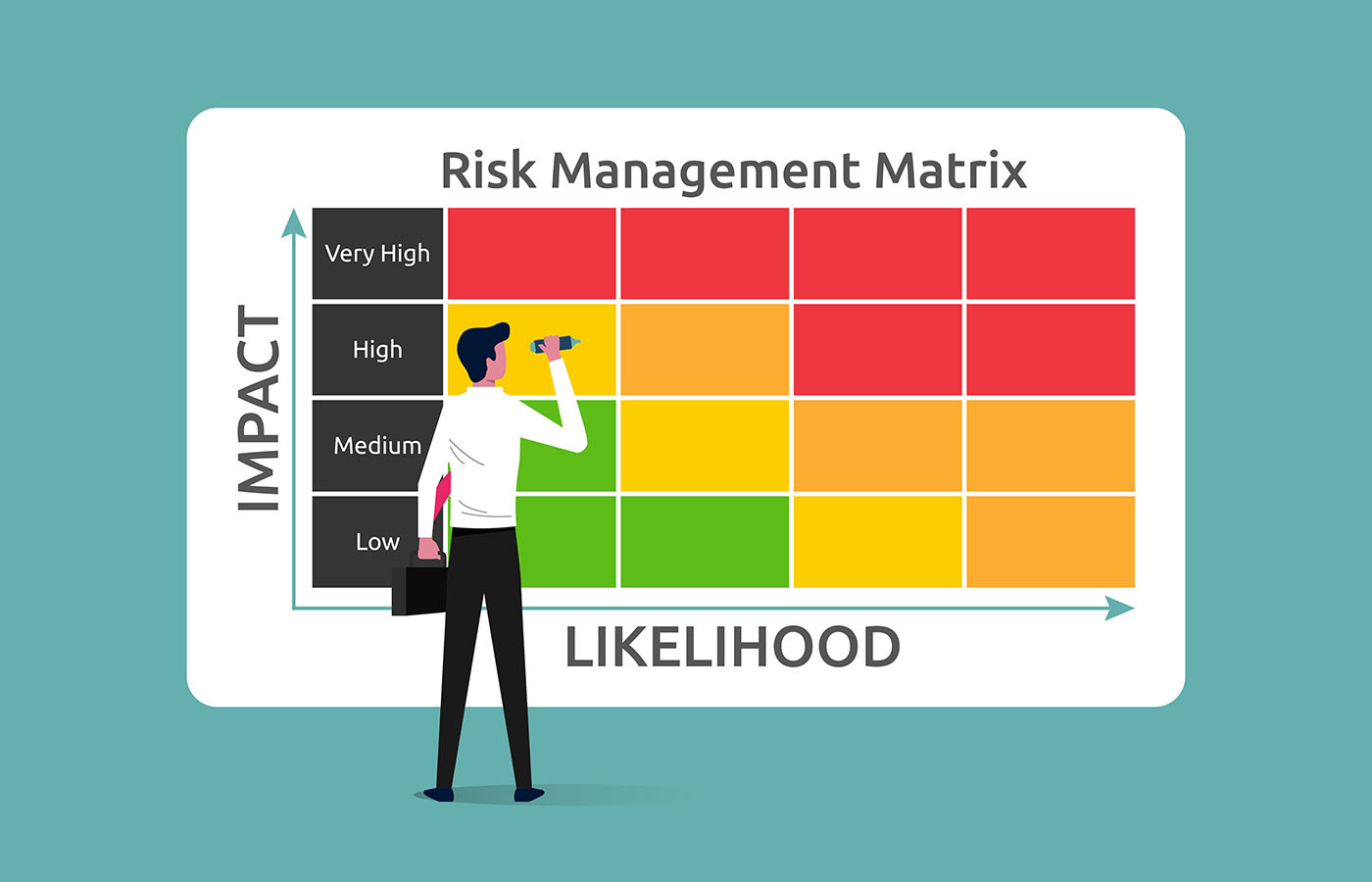
We are seeing an increasing requirement from regulatory and funding organisations that training providers have Enterprise Risk Management (ERM) and effective KPI’s to help manage business resilience. We offer a full consultancy and support service to help you develop a system that is appropriate for your business and linked to your Business Plan
Enterprise Risk Management (ERM) identifies barriers to providing the delivery of products or services. For a business to be resilient it should be aware of potential barriers and have mitigation and impact measurements that provide a solution for unexpected consequences.
Identifying risk mitigations and where they are not currently in place enables the business to devise an implementation plan.
RISK MATURITY
To begin your risk journey you first need to understand where your business currently is with enterprise risk and that is what we mean by risk maturity. There are varying levels of maturity and we use three maturity levels at Workforce Development Consultancy but you can use as many maturity levels as fits your business style.
Basic Maturity: This means that a business will have no software or paper system in place to record their risks and they are not discussed at senior management level or stakeholder meetings. A Basic level company will likely be identifying and mitigating risks but evidencing this for a regulatory body will be difficult and take a lot of time.
Emerging Maturity: This will be a business that recognises the importance of enterprise risks and will have a method of recording it and it will be discussed at the highest levels of the organisational structure. The risks will be administered by a risk officer, this could be a member of your compliance or assurance team or a member of your Senior Management. The risks will be reportable so evidencing them will be easier. Most businesses are at this level of maturity as they simply don’t have the capacity to do more.
Embedded Maturity: This means that a business has enterprise risk embedded at all levels of its organisational structure. Enterprise risk is discussed at team meetings as well as at higher levels of management and everyone can have input into the process. There will be a dedicated risk officer in the structure and if the organisation is large enough possibly a small team. Risk will be linked into business and performance reports and be considered when high-level decisions are made.
THE FOUR PILLARS OF RISK
Every conceivable risk can fall into one of four categories and these categories are what we refer to as the 4 pillars. Enterprise Risk Management can often be made more complicated than it needs to be so sticking to these four general categories can help staff involved in risk management become more engaged in the process.
The Compliance Pillar is a category for risks that deal with the failure to comply with government legislation or awarding body guidelines.
The Environment Pillar is a category for risks that deal with events outside of your control, like severe weather, flooding and pandemics.
The Financial Pillar is a category for risks that deal with financial plight, like failing to pay invoices or operational costs becoming unsustainable.
The Operational Pillar is a category for risks that deal with potential barriers to delivering your product or service.